

The Pixel 10 has been out for less than a year — and leaks about the Pixel 11 are already everywhere.
CAD renders from case manufacturers. Internal Google codenames. Benchmark listings for an unannounced chip. A credible modem switch that could fix the Pixel’s longest-running complaint. It’s a surprisingly busy pipeline for a phone that won’t ship until August 2026.
I’ve been tracking every credible piece of information that’s surfaced over the past few months and consolidating it here. Here’s everything we know — and, importantly, what we don’t know yet.
✅ Pixel 11 Quick Snapshot (All Leaked — Not Confirmed by Google)
| Detail | What’s Leaked |
|---|---|
| Chip | Tensor G6, 7-core, TSMC 2nm |
| Modem | MediaTek M90 (replaces Samsung) |
| Security chip | Titan M3 (“Google Epic”) |
| Display (standard) | 6.3″ LTPO OLED, up to 120Hz |
| Display tech | Samsung M16 panel (rumored) |
| RAM | 12GB |
| Base storage | 128GB (possible upgrade to 256GB) |
| Expected price | Starting at $799 |
| Launch window | August 2026 |
| OS | Android 17 |
| Codenames | Cubs (11), Grizzly (Pro), Kodiak (Pro XL), Yogi (Pro Fold) |
The Tensor G6: Google’s Most Significant Chip Yet
This is the story of the Pixel 11, and it’s genuinely worth being excited about.
Every Pixel since the Pixel 6 has used chips manufactured by Samsung — including the Tensor G5 in the current Pixel 10. The upcoming Tensor G6 is reportedly set to use TSMC’s advanced 2nm process, a move that could position Google’s chips at the very forefront of mobile technology. Android Headlines
To put that in context: Apple’s A18 Pro used a 3nm process. Samsung’s latest Exynos also uses 3nm. Google moving to 2nm represents a genuine generational leap in power efficiency — more work per watt, less heat under load, and longer battery life even without increasing battery capacity. The Pixel Store
The architecture is also unusual. Early Geekbench listings suggest an unusual 7-core setup — one Cortex-C1 Ultra, four C1-Pro cores at 3.38GHz, and two C1-Pro cores at 2.65GHz — rather than the industry-standard 8-core configuration. Tech Sportskeeda That missing core isn’t a mistake or a cost cut. According to multiple sources, Google is deliberately trading one core for better thermal management and sustained performance. The Pixel Store
The practical meaning: less overheating during extended use, and better battery life in real-world conditions — which have been the two most consistent complaints about Pixel phones for years.
The Tensor G6 is also reportedly accompanied by a new Titan M3 security coprocessor (internally codenamed “Google Epic”), replacing the Titan M2 found in the Pixel 10. This dedicated security module strengthens defenses against cyber threats, making the Pixel 11 a more reliable choice for privacy-conscious users. Gizmochina
The Modem Switch: Fixing the Pixel’s Biggest Weak Spot
If the chip upgrade is the exciting story, the modem switch is the important one.
Every Pixel from the Pixel 6 through Pixel 10 used Samsung Exynos modems, which have been the most consistent source of user complaints across the entire Pixel lineup — connectivity drops, weak signal, and inconsistent performance that competing phones with Qualcomm modems didn’t exhibit. The Pixel Store
The Pixel 11 is rumored to swap that out entirely for the MediaTek M90. The M90 packs support for sub-6 and mmWave 5G data, alongside satellite connectivity — the ability to establish a satellite connection during emergencies, now a commonly expected feature on flagship phones. Tech Advisor
There’s also a notable connectivity upgrade: the M90 adds dual 5G SIM dual-active support, meaning two SIM cards can both be on 5G simultaneously — a first for any Pixel phone. The Pixel Store
If this modem performs as advertised, it addresses the single longest-running hardware criticism in Pixel history. That’s not a small thing for anyone who’s bounced off a Pixel purchase because of connectivity concerns in the past.
Display: Samsung’s Best Panel First
Google is tipped to be using Samsung Display’s top-of-the-line M16 OLED panel for the Pixel 11 range, which would beat the iPhone 18 Pro phones to the punch — and Samsung Mobile’s own Galaxy phones too. Tech Advisor
That’s a notable first-mover advantage. The M16 panel is expected to bring improvements in brightness, color accuracy, lifespan, and power efficiency over the M14 panel used in the Pixel 10’s excellent display.
The screen sizes are expected to stay familiar across the lineup. The Pixel 11 standard is expected to stay at around 6.3 inches, the Pro at 6.3 inches, and the Pro XL at 6.8 inches — all LTPO with variable 1–120Hz refresh rates. Android Headlines One unconfirmed report suggests the standard Pixel 11 could grow to 6.6 inches, but that hasn’t been corroborated.
The Pixel 10 already had one of the best displays at its price point, hitting 3,000 nits peak brightness. The M16 panel is expected to improve on that figure. One rumor mentions 144Hz on Pro models — but that remains unconfirmed as of early April 2026.

Design: Refinement, Not Revolution
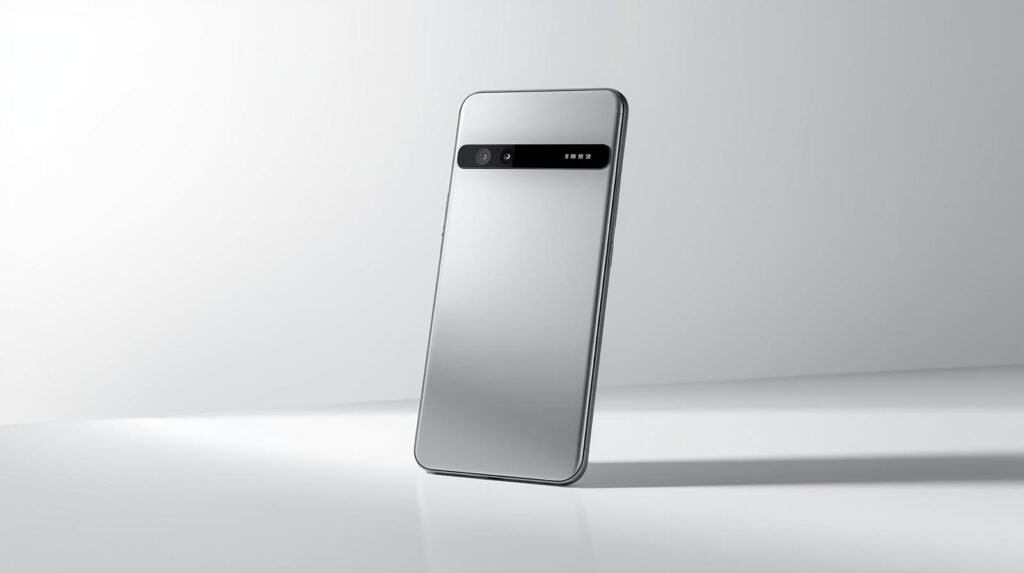
Leaked CAD renders suggest the Pixel 11 will have noticeably thinner bezels and a tweaked all-black camera bar Android Headlines compared to the Pixel 10’s color-matched version. Two things jump out from the renders that have circulated since late March:
First, the bezels. The Pixel 10’s display bezels were noticeably thick for a $799 phone, especially in 2026. Based on the CADs, that’s been addressed. The screen looks considerably more immersive.
Second, the camera bar has gone entirely black glass, regardless of the phone’s body color. The Pixel 10 matched the camera bar to the phone’s color, which some liked and others found dated. The all-black glass camera bar looks more like the Pixel 6 era — which many consider the design high point of the Pixel line.
The device is also reportedly slightly thinner at 8.5mm, though this is essentially identical to the Pixel 10. Android Headlines
Google confirmed in a Bloomberg interview that the brand redesigns its phones every two to three years, and the Pixel 10 was not a redesign year. So the Pixel 11 is expected to be a polish-and-refine update — not a visual reset.
Camera: AI Over Hardware, Again
The Pixel 11’s camera hardware hasn’t leaked in detail — which is typical for Google, whose camera advantage has always come from software rather than specs.
What has leaked are a set of new AI camera features, many originating from an internal Google chip document obtained by Android Authority:
Speak-to-Tweak: Voice-controlled photo editing. You describe the change you want, the Tensor G6 applies it on-device.
Sketch-to-Image: Draw a rough shape or scene, and the phone generates a detailed image from it. Runs entirely locally.
Ultra-Low-Light Video: A new video mode that processes high-quality footage in lighting conditions as low as 5–10 lux — roughly equivalent to a dimly lit room or cloudy dusk. Android Authority
4K Cinematic Blur: The debut of 4K 30fps Cinematic Blur, upgrading from the current lower-resolution version. Android Authority
AI Video Relight: A video relight feature that lets you adjust lighting in footage after it’s already been recorded. Android Authority
On the hardware side, the Pro models are expected to continue with a triple rear camera system. 100x zoom capability is expected at minimum, matching what some Pixel 10 models can already do with Super Res Zoom. Tech Advisor
One more feature rumored for the Pro lineup: under-display IR face unlock (internally called “Project Toscana”). If this ships, it would bring faster, more secure face recognition to Pixel phones for the first time — a feature Apple has offered for years and which Pixel has conspicuously lacked.
When Will It Launch? (And What’s the Price?)
The Pixel 11 is expected to be introduced at a “Made by Google” event in August 2026, continuing the trend Google started with the Pixel 9 and Pixel 10. PhoneArena Google moved its launch window forward to August specifically to get new phones in front of consumers before Apple’s September iPhone announcement.
Pre-orders are expected to open the same day as the announcement, with shipping typically beginning within a week.
Pricing has not leaked. Based on recent pricing trends, the Pixel 11 base model is expected to start around $799 PhoneArena — unchanged from the Pixel 10. The Pixel 11 Pro is expected at around $999–$1,049, with the Pro XL around $1,249–$1,299. The Pro Fold is expected to jump significantly, likely starting near $1,849–$1,999.
One variable worth watching: rising RAM chip prices and other component costs may cause a price increase, as seen with Samsung’s Galaxy S26 series PhoneArena — though the iPhone 17 maintained its predecessor’s pricing. Google’s pricing decision is likely to be one of the most watched aspects of the Pixel 11 launch.
The Four Models: Codenames and What We Know
Pixel 11 (“Cubs”) — 6.3″ display, 12GB RAM, standard dual or triple camera, Tensor G6, starting at ~$799
Pixel 11 Pro (“Grizzly”) — 6.3″ display, upgraded cameras, Tensor G6, starting at ~$999
Pixel 11 Pro XL (“Kodiak”) — 6.8″ display, largest battery in the lineup, top camera system, Tensor G6, starting at ~$1,249
Pixel 11 Pro Fold (“Yogi”) — a thinner, more refined foldable with an approximately 8–8.2 inch inner display and 6.4-inch cover display, featuring the triple rear camera from the Pro lineup, powered by Tensor G6 PC Quest, starting at ~$1,849
The Pro Fold may launch slightly later than the other three models — the same pattern Google used with the Pixel 10 Pro Fold, which arrived in October 2025, weeks after the rest of the lineup.
Should You Wait?
If you’re on a Pixel 8 or older, the Pixel 11 looks like a genuinely meaningful upgrade — 2nm chip, new modem, thinner bezels, better display, and new AI camera features all in one package. Waiting until August makes sense.
If you’re on a Pixel 9, the Pixel 11 is a generational leap in chip efficiency and connectivity. The Pixel 10 was an incremental year; the Pixel 11 is not.
If you’re on a Pixel 10, the changes are more evolutionary. You’ll notice the modem improvement and likely get better battery life, but this isn’t a must-upgrade year.
If you need a phone now, the Pixel 10 and Pixel 10 Pro are both excellent phones at prices that have been dropping since the Pixel 10a launched. The Pixel 11 is five months away — that’s a long time to wait.
You Might Also Like
- Google Pixel 10a Review: Is $499 Worth It in 2026?
- Apple Intelligence vs Gemini: Which AI Agent Actually Works Better?

스마트폰과 IT 기기를 오랫동안 직접 구매하고 사용해온 일반 사용자입니다.
화려한 스펙보다 “실제로 쓸 만한가”를 더 중요하게 봅니다.
갤럭시와 아이폰을 병행 사용하면서 느낀 점, 설정하면서 막혔던 것들,
부모님 폰 세팅해드리며 깨달은 것들을 솔직하게 정리하고 있습니다.
특히 스마트폰을 어렵게 느끼는 분들, IT 초보자, 부모님 세대를 위한
쉽고 실용적인 가이드에 집중합니다.
“나도 해봤는데 이렇더라” — 그 한마디가 이 블로그의 시작이었습니다.
📩 문의 및 제보: kim.wasp@gmail.com