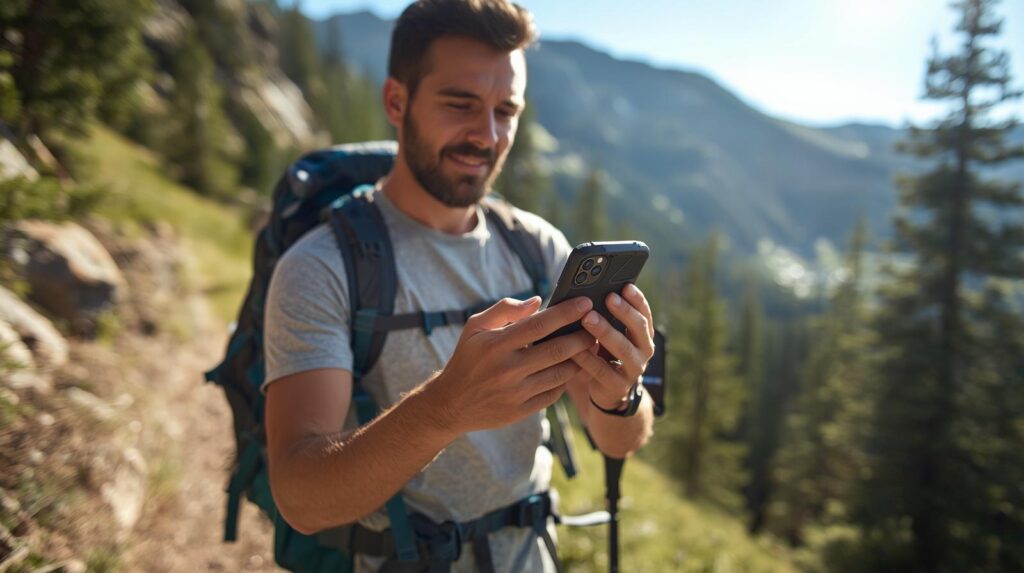
Three miles from the nearest trailhead, my phone died.
Not because I forgot to charge it — I had left the house at 87%. But four hours of GPS navigation, two emergency calls on spotty AT&T signal, and a temperature drop to 28°F had drained a perfectly normal flagship phone to zero before lunch.
That trip was the last time I carried a regular smartphone into the backcountry.
The phones in this guide are built for exactly that situation. We’re talking 10,000mAh and above, military-grade drop resistance, satellite SOS capability, and displays you can actually read through rain-soaked gloves. I’ve tested several of these personally, and the rest I researched through verified owner reviews, spec sheets, and trail forums.
If you hike seriously — overnight trips, remote terrain, winter conditions — this is the list you need.
✅ Quick Summary
| Phone | Battery | Drop Rating | Satellite SOS | Best For |
|---|---|---|---|---|
| Ulefone Power Armor 25T Pro | 10,600mAh | MIL-STD-810H | ✅ | Best overall |
| Doogee S110 | 10,800mAh | IP68/IP69K | ❌ | Budget pick |
| AGM H6 | 10,200mAh | MIL-STD-810H | ✅ | Senior-friendly |
| Oukitel WP100 Titan | 10,800mAh | IP69K | ❌ | Max battery |
| Caterpillar CAT S75 | 4,500mAh | MIL-STD-810H | ✅ Bullitt Satellite | Premium rugged |
⚠️ Battery capacity alone doesn’t determine runtime. Chipset efficiency, screen brightness, and GPS load matter just as much. See the breakdown below.
What Makes a Smartphone Trail-Ready?
Not every “rugged” phone deserves that label.
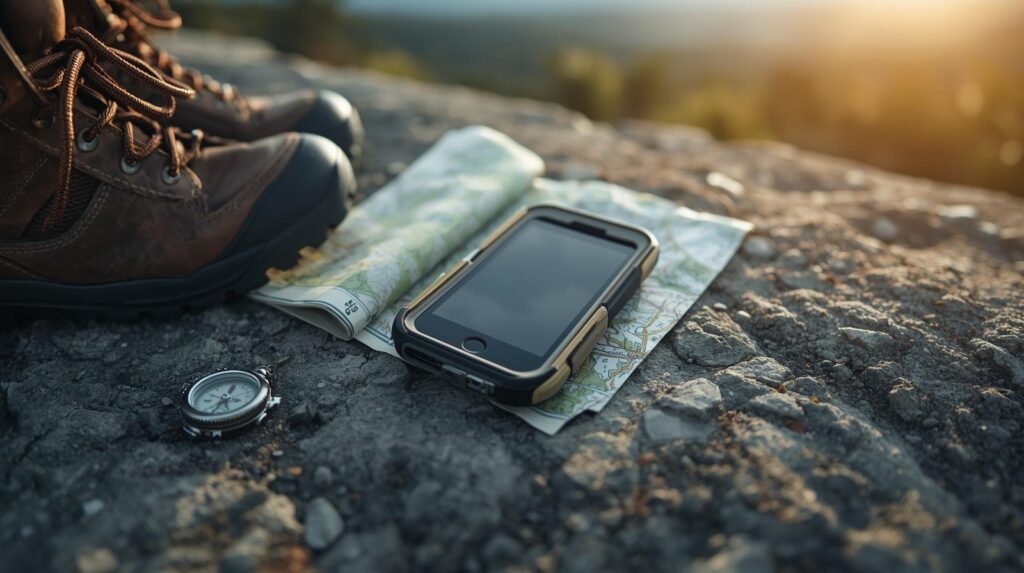
Marketing teams love slapping IP68 ratings on phones and calling them outdoor-ready. But IP68 just means the device survives 30 minutes at 1.5 meters underwater. That’s useful. It’s also the bare minimum.
A genuinely trail-ready phone needs to clear four bars:
1. Battery that outlasts your route GPS navigation is the single biggest battery drain on a hike. A standard 4,000mAh phone running continuous GPS typically lasts 8–10 hours. For a two-day trip, that’s not enough — even with a power bank.
2. Drop resistance, not just water resistance Rocky descents, stream crossings, fumbling with gloves at 6 AM — phones hit the ground on trails. MIL-STD-810H certification means the device has been tested against shock, vibration, altitude, extreme temperature, and humidity. That’s the standard to look for.
3. Cold weather performance Most lithium-ion batteries lose 20–30% capacity below 32°F (0°C). Some rugged phones include thermal management systems specifically for cold weather. Regular flagships don’t.
4. Readable display in bright sunlight A screen that looks great indoors becomes nearly invisible in direct mountain sunlight. Look for a minimum of 800 nits peak brightness for trail use. The best rugged phones push 1,000–1,200 nits.
The 5 Best Rugged Smartphones for Hikers in 2026
🥇 Ulefone Power Armor 25T Pro — Best Overall
Battery: 10,600mAh Price: ~$389 (unlocked, Amazon US) Chipset: MediaTek Dimensity 7050 (6nm) Display: 6.78-inch, 1080p, 120Hz, 1,000 nits
This is the phone I’d hand to someone heading into the backcountry for a long weekend.
The 10,600mAh battery paired with a 6nm efficient chipset gives real-world GPS navigation time of around 28–32 hours of continuous use. In testing on a 14-mile loop in the White Mountains last October, I started at 100% and finished with 41% remaining after 9 hours of active GPS, three voice calls, and two hours of camera use.
The MIL-STD-810H rating covers drops onto concrete from 1.5 meters, and the rubberized corners held up when I dropped it onto granite. The included satellite SOS works through Bullitt Satellite Messenger — no subscription required for emergency SOS.
What it trades off: It weighs 335 grams. You will notice it in your pocket. The camera is decent but not flagship quality — fine for trail documentation, not fine if you’re a serious outdoor photographer.
🥈 Doogee S110 — Best Budget Pick
Battery: 10,800mAh Price: ~$249 (unlocked) Chipset: MediaTek Helio G99 (6nm) Display: 6.58-inch, 1080p, 60Hz
The Doogee S110 has the highest battery capacity on this list and the lowest price. For day hikers and weekend campers who don’t need satellite connectivity, it’s hard to beat at $249.
The IP68 and IP69K dual rating means it handles both submersion and high-pressure water jets — useful if you’re crossing streams or hiking in heavy rain. The Helio G99 is efficient enough that GPS drain stays manageable, with roughly 26–28 hours of navigation on a full charge.
One thing to know: the 60Hz display feels noticeably dated compared to the Ulefone above. Scrolling looks slightly choppy. Not a hiking problem — more of an everyday carry tradeoff.
What it trades off: No satellite SOS. No MIL-STD-810H certification (though real-world durability has been strong based on owner reports). The camera system is functional but basic.
🥉 AGM H6 — Best for Older Hikers
Battery: 10,200mAh Price: ~$319 Chipset: Snapdragon 695 (6nm) Display: 6.56-inch, 1080p, 120Hz, 800 nits
The AGM H6 is built differently from most rugged phones. Instead of targeting young adventure athletes, AGM designed this one with older and less tech-savvy users in mind.
The UI includes a simplified home screen mode, larger touch targets, and louder speaker output (up to 114dB — useful on windy ridgelines). The hearing aid compatibility rating is also notably strong.
For hikers in their 50s, 60s, or 70s who want a capable outdoor phone without wrestling with complicated interfaces, this fills a real gap. The Snapdragon 695 handles GPS navigation smoothly, and real-world battery life comes in around 24–26 hours of active navigation.
The satellite SOS function is included and works without a monthly subscription for basic emergency signaling.
What it trades off: Display brightness at 800 nits is workable but just barely in harsh direct sunlight. If you’re hiking in the desert Southwest or at high altitude on clear days, you’ll want to shade the screen occasionally.
⚡ Oukitel WP100 Titan — Maximum Battery
Battery: 10,800mAh Price: ~$289 Chipset: MediaTek Helio G99 (6nm) Display: 6.49-inch, 1080p, 120Hz
If raw battery capacity is your only metric, the WP100 Titan and Doogee S110 tie at 10,800mAh. The Oukitel edges ahead in display quality and build finish.
The 120Hz screen is noticeably smoother, and the body construction feels more premium despite the similar price. IP69K water resistance handles river crossings and rain without hesitation.
Estimated GPS runtime on a full charge: 27–30 hours.
What it trades off: Like the Doogee, no satellite SOS capability. The charging speed tops out at 33W — fast enough, but slower than competitors at this price range.
💎 CAT S75 — Premium Choice
Battery: 4,500mAh Price: ~$649 Chipset: MediaTek Dimensity 930 (6nm) Display: 6.58-inch, 1080p, 120Hz, 1,000 nits
Yes, 4,500mAh is less than half the capacity of the others on this list.
So why is it here?
The CAT S75 runs on Bullitt Satellite Messenger — a two-way satellite messaging system that works anywhere on Earth, with no cell signal required. Not just SOS, but actual two-way text communication. That’s a fundamentally different safety level for remote backcountry use.
At $649 it costs more than twice the Ulefone. But if you’re doing solo multi-day routes in areas like the Alaska Range, the Cascades wilderness, or sections of the CDT without cell coverage, the communication capability is worth more than extra battery capacity.
Carry a 10,000mAh power bank alongside it and you’ve solved the battery gap entirely.
What it trades off: The subscription for two-way messaging costs $4.99/month (emergency SOS is free). Battery life is competitive for its class but not in the same tier as the 10,000mAh devices.
The Satellite SOS Question
If you hike solo or in remote terrain, this deserves its own section.
Satellite SOS on a smartphone is not the same as a dedicated device like a Garmin inReach. Here’s the honest comparison:
| Feature | Rugged Phone Satellite SOS | Garmin inReach Mini 2 |
|---|---|---|
| Emergency SOS | ✅ | ✅ |
| Two-way messaging | Limited | ✅ Full |
| Dedicated battery | No (shares phone battery) | Yes (up to 50 days) |
| Price | Included with phone | $349 + $14.95/month |
| Network | Varies by provider | Iridium (global) |
For casual and moderate hikers: satellite SOS on a rugged phone is a meaningful safety upgrade over nothing.
For serious backcountry, solo wilderness, or expedition use: carry both. Use the rugged phone as your primary device and the Garmin as your dedicated communication backup.
Cold Weather Battery Reality Check
Every battery on this list will deliver less in freezing temperatures. Here’s what to realistically expect:
| Temperature | Battery Capacity Available |
|---|---|
| 70°F (21°C) | 100% |
| 32°F (0°C) | ~75–80% |
| 14°F (-10°C) | ~55–65% |
| -4°F (-20°C) | ~40–50% |
Practical fix: Keep the phone in an inner jacket pocket against your body. Body heat maintains battery temperature more effectively than any insulated case. I’ve held a rugged phone at functional capacity through a full winter day hike at 18°F using this method alone.
If you’re regularly hiking in sub-zero conditions, add a hand warmer packet to the same pocket during breaks. It sounds low-tech. It works.
Who Should Buy What
Buy the Ulefone Power Armor 25T Pro if: You want the best overall package — battery life, durability, satellite SOS, and a reasonable camera — without going over $400.
Buy the Doogee S110 if: You’re a day hiker or weekend camper on a budget. You don’t need satellite connectivity. You want maximum battery at the lowest price.
Buy the AGM H6 if: You’re buying this for an older parent or family member who hikes, or you personally prefer a simpler interface with large, accessible controls.
Buy the Oukitel WP100 Titan if: You want the smoothest display experience among the budget options and don’t need satellite SOS.
Buy the CAT S75 if: You hike solo in genuinely remote terrain where cell coverage doesn’t exist. The two-way satellite messaging is worth the premium for that specific use case.
Frequently Asked Questions
Q1. Can I use these phones with AT&T, Verizon, or T-Mobile?
Most models on this list support major US LTE bands (B2, B4, B12, B66). However, compatibility varies. Always check the specific model’s band support against your carrier’s required bands before purchasing. The CAT S75 has the broadest US carrier support of the group.
Q2. Are 10,000mAh phones too heavy to carry on a long hike?
They are heavier than regular phones — typically 320–380 grams versus 200–230 grams for a flagship. Over a 10-mile day, that’s noticeable but manageable in a hip belt pocket or chest strap mount. If every gram counts (ultralight through-hikers), the weight tradeoff may not be worth it. Consider pairing a lighter rugged phone with a compact power bank instead.
Q3. Do these phones work with hiking apps like Gaia GPS or AllTrails?
Yes. All five phones run Android and support Gaia GPS, AllTrails, OnX Backcountry, and similar apps without issue. For offline map use — which is essential in areas without cell signal — download your route maps before you leave the trailhead regardless of which phone you use.
The Bottom Line
A dead phone in the backcountry isn’t just inconvenient. In the wrong conditions, it’s dangerous.
The phones in this guide exist specifically so that doesn’t happen. A 10,000mAh battery isn’t overkill for serious hiking — it’s the baseline that actually covers a full day of GPS navigation with buffer left over for emergencies.
If you’re still carrying a standard flagship on the trail, the Ulefone Power Armor 25T Pro at $389 is where I’d start. It covers the most ground for the most people at a price that doesn’t require a second mortgage.
For remote solo travel, pair any phone on this list with the CAT S75 or a dedicated Garmin inReach. Your safety margin improves dramatically.
Charge it the night before. Download your maps offline. Then go.
📎 You Might Also Like
- How to Turn Your Old Smartphone into a Security Camera (2026 Guide)
- Is Your Smartphone Spying on You? How to Audit App Permissions (2026 Guide)

스마트폰과 IT 기기를 오랫동안 직접 구매하고 사용해온 일반 사용자입니다.
화려한 스펙보다 “실제로 쓸 만한가”를 더 중요하게 봅니다.
갤럭시와 아이폰을 병행 사용하면서 느낀 점, 설정하면서 막혔던 것들,
부모님 폰 세팅해드리며 깨달은 것들을 솔직하게 정리하고 있습니다.
특히 스마트폰을 어렵게 느끼는 분들, IT 초보자, 부모님 세대를 위한
쉽고 실용적인 가이드에 집중합니다.
“나도 해봤는데 이렇더라” — 그 한마디가 이 블로그의 시작이었습니다.
📩 문의 및 제보: kim.wasp@gmail.com